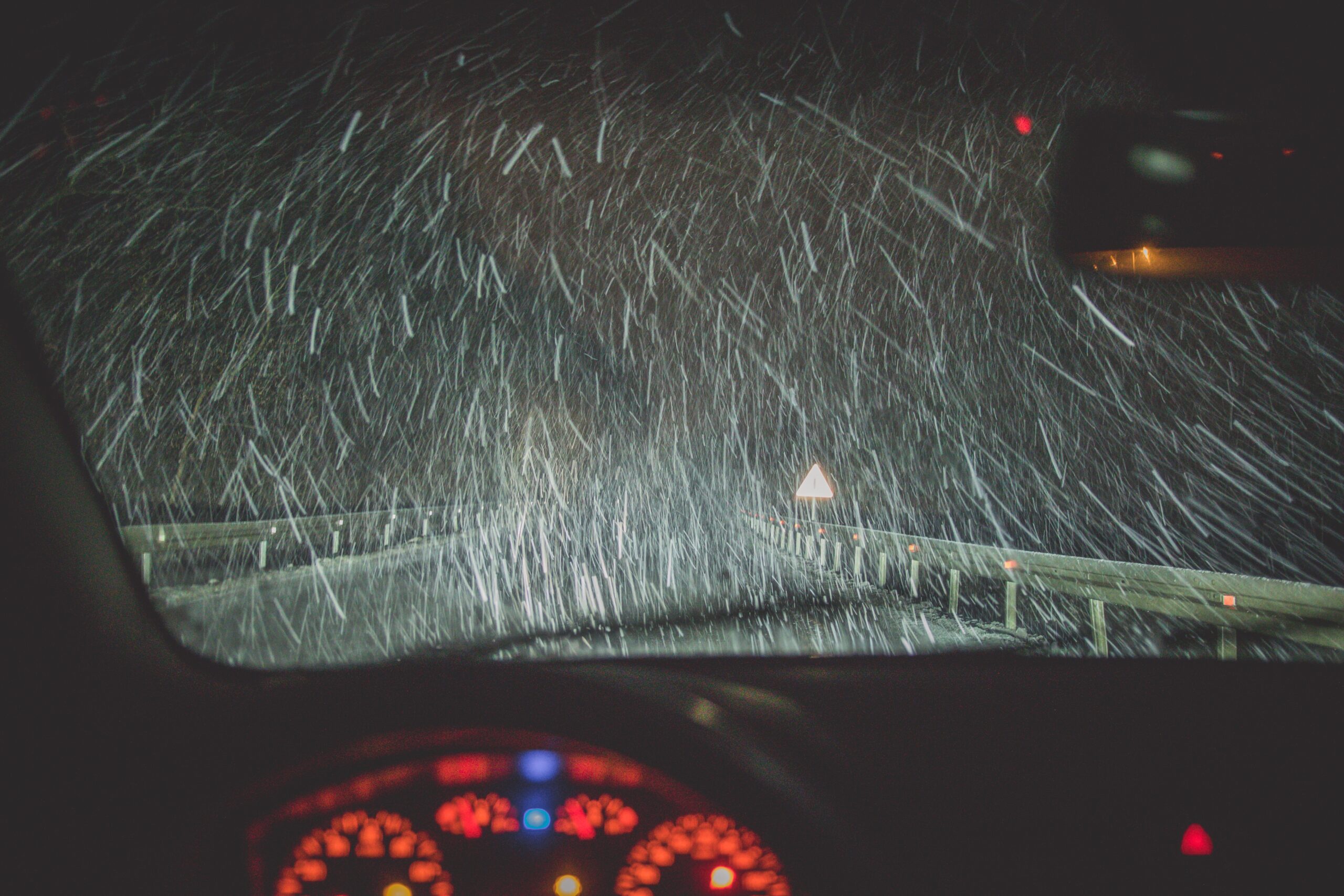
Driving at night safety tips matter more than most drivers realize. Fall and winter bring foggy mornings, darker commutes, and reduced visibility that make every trip a little more unpredictable. Whether you’re heading out before sunrise or driving home after dark, you’re navigating one of the riskiest windows on the road.
Night driving during colder months comes with sharper hazards. Visibility drops. Glare increases. And small issues like fogged glass or dim headlights become serious problems after sunset. What feels like a minor inconvenience during daylight can turn into a dangerous blind spot in the dark.
For insurers, these early evening and pre-dawn hours are also associated with a higher volume of claims, especially in rural or poorly lit areas.
1. Check and Upgrade Your Headlights
One of the most overlooked night-driving risks is headlight performance.
Over time, headlights lose brightness or become clouded by oxidation. If your lights look hazy, yellowed, or uneven, they’re likely not illuminating the road as well as you think. That delay in visibility can mean less reaction time for pedestrians, wildlife, or debris.
Cleaning headlight lenses and replacing older bulbs with brighter, weather-resistant options can significantly improve night visibility with minimal effort.
2. Combat Windshield Fog Before It Starts
Windshield fog is a quiet hazard that builds gradually and becomes dangerous fast.
Moisture inside the vehicle from wet shoes, jackets, or even breathing creates a film on the glass that amplifies glare from oncoming headlights. Using your A/C in defrost mode helps pull moisture out of the cabin.
Some drivers also rely on anti-fog treatments, or even a light wipe of shaving cream on the inside of the glass, wiped clean, to create a temporary fog-resistant layer.
3. Safe Night Driving Can Lower Insurance Risk
Beyond vehicle prep, night driving habits matter too.
Some insurers now use telematics programs that reward smooth, cautious driving, even during low-visibility hours. Avoiding hard braking, maintaining steady speeds, and driving attentively at night can reduce perceived risk and, in some cases, lead to discounts.
If your routine includes frequent early-morning or evening driving, it’s worth understanding how your policy reflects that.
This is a good moment to confirm your coverage still matches how and when you drive: https://quotescouts.com/review-your-auto-insurance-policy/
Driving at Night Safety Tips That Make a Difference
Driving in the dark doesn’t have to feel tense. Small adjustments in visibility, vehicle setup, and driving behavior go a long way toward reducing risk.
As the seasons change and daylight shrinks, it’s also smart to reassess whether your insurance setup still makes sense for your routine. If your habits have shifted, this guide explains when updates are worth making: https://quotescouts.com/when-to-update-car-insurance/
Final Thought
When visibility drops, preparation matters.
Clear glass, strong headlights, and steady driving habits help you stay confident and alert after dark. And knowing your coverage reflects your real-world driving helps keep surprises off the road and off your record.
Because at night, awareness and preparation make all the difference.